Founder, Doon Digital
Save this article to read later and share with your network
Lead Generation for Dehradun Clinics: WhatsApp + GMB
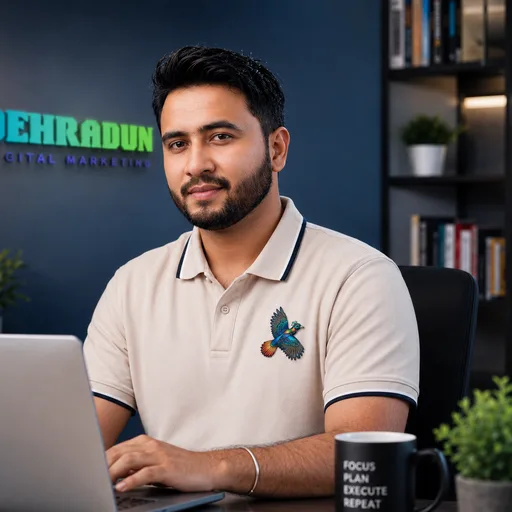
By Pankaj Singh, founder of Doon Digital.
Clinics are the highest-conversion vertical I work with in Dehradun. A well-built lead generation system for a Dehradun dental, dermatology, physiotherapy, or IVF clinic typically produces 60 to 150 qualified WhatsApp inquiries per month at a cost per lead under ₹200.
The reason: Dehradun patients make appointment decisions quickly, value local proximity, and trust WhatsApp conversations over form fills. A clinic that builds for this specific buyer psychology dominates the local market. A clinic that runs generic marketing playbooks struggles regardless of medical reputation.
Here's the playbook I run for Dehradun clinic clients, from dental to dermatology to physiotherapy. The specifics, the numbers, the order of operations.
Why clinics convert so well in Dehradun specifically
Three factors make clinics uniquely well-suited to the local lead-gen game.
Patient decision windows are short. Tooth pain at 9 PM means appointment booked by 10 PM. Skin reaction means appointment by tomorrow. Physiotherapy after an injury, similar urgency. The window between "I need help" and "I'm calling" is often under 2 hours.
Proximity beats brand authority. A patient in Ballupur with a toothache doesn't care that "Smile Care" has 4.8 stars city-wide. They want the dentist within 4 kilometres. Local proximity, hours, availability matter more than national reputation.
Reviews drive everything. Pre-appointment, 80% of Dehradun patients read reviews before calling. Star rating, recency of reviews, and replied reviews all factor heavily. A clinic with recent 4.7-star reviews beats a clinic with old 4.4-star reviews.
These three factors combined make Dehradun clinics ideal for the WhatsApp + GMB combo playbook.
The 5-layer lead generation stack
This is the system I build for clinic clients. Five layers, each with a specific job.
Layer 1: Google Business Profile (the discovery layer)
Most Dehradun clinics discovery happens through Google Maps and the local pack. GBP is therefore the primary visibility tool. Build to win it.
Specific clinic-side GBP optimizations:
- Primary category exactly correct (e.g., "Dental Clinic", not "Doctor"; "Dermatologist", not "Skin Specialist")
- Every service listed as a separate item with photo and price range (cleaning ₹500, RCT ₹3,500-₹8,000, etc.)
- All staff members and their specializations listed
- Hours including evening hours (most Dehradun patients book after 6 PM)
- Languages spoken (Hindi, English, Garhwali if applicable)
- Insurance accepted (huge trust signal for high-ticket procedures)
- Wheelchair accessibility status
- Payment methods accepted (UPI, cards, EMI)
- "By appointment" or "Walk-ins welcome" attribute
Photo strategy:
- Interior photos: reception, waiting area, treatment rooms (5-8 photos)
- Team photos: dentist or doctor with credentials visible (3-5 photos)
- Equipment photos: modern X-ray, laser, chairs (3-5 photos)
- Before-and-after photos of treatments (where appropriate and consented, 5-10 photos)
- Weekly photo posts to keep GBP "fresh" signal active
Most Dehradun clinics have 4 to 8 photos uploaded once in 2020 and never refreshed. This alone keeps them out of the local pack.
Layer 2: Review velocity system (the trust layer)
In 2026, review velocity outweighs total review count for Dehradun clinic rankings. A clinic with 30 fresh reviews in the last 90 days outranks one with 200 reviews from 2020.
The exact workflow:
- Patient finishes appointment, walks out
- Within 30 minutes, your front-desk staff sends a WhatsApp message with a one-click Google review link
- Pre-saved message template: "Thanks for visiting [Clinic Name] today. Would you mind taking 30 seconds to share your experience? It really helps us. [Google review link]"
- Add a follow-up SMS 24 hours later if no review yet
- Track the rolling 30-day review count in a sheet
- Reply to every review within 24 hours, positive or negative, using patient's name (e.g., "Thanks for the kind words about your root canal experience, Priya. We're glad it was painless.")
The targets:
- 4 to 8 fresh reviews per month, consistently
- 4.5+ star average
- 100% reply rate within 24 hours
The metrics to track:
- Rolling 30-day review count
- Review-to-appointment ratio (how many appointments generated a review)
- Average response time on reviews
A Dehradun dental clinic I work with went from 1 review per month to 7 reviews per month using this exact workflow. Within 4 months, their map pack ranking improved from position 6 to position 2 for "dentist near Rajpur Road" and similar queries. Monthly new-patient bookings increased 80%.
Layer 3: WhatsApp lead capture (the conversion layer)
WhatsApp is your highest-converting channel for Dehradun clinics. Period. The cost-per-lead and close-rate numbers are unmatched:
- SEO lead → WhatsApp inquiry: ₹80 to ₹400 CPL, 25% to 40% close rate
- Google Ads → WhatsApp inquiry: ₹200 to ₹600 CPL, 30% to 50% close rate
- GBP listing → WhatsApp inquiry: ₹0 marginal CPL, 35% to 55% close rate
- Walk-in: highest close rate, but limited by physical foot traffic
WhatsApp wins because of speed. A patient with toothache wants confirmation in 5 minutes, not "we'll call you back tomorrow".
The setup:
- WhatsApp Business account with verified business profile
- Click-to-WhatsApp button visible on every page of website, sticky on scroll
- Same button enabled on Google Business Profile (the 2025 feature that changed everything)
- Auto-reply within 30 seconds: pricing range PDF, FAQ document, "We'll be with you in 5 minutes"
- Human reply within 5 minutes during business hours (this SLA is the most important detail)
- Voice notes for explanations (Dehradun patients respond better than to long text)
The conversation template:
- Acknowledge: "Hi [Name], thanks for reaching out to [Clinic Name]."
- Confirm: "I see you're asking about [service]. Yes, we offer that."
- Pricing: "The typical cost is ₹X to ₹Y depending on complexity."
- Action: "Would you like to book a consultation today or tomorrow?"
- Confirmation: Lock in a specific time, send a calendar reminder.
End-to-end this takes 4 to 7 minutes per WhatsApp inquiry. With proper systems (saved templates, calendar integration), one front-desk person handles 30 to 60 WhatsApp inquiries per day.
Layer 4: Hyperlocal landing pages (the content layer)
Beyond GBP, you need website pages that rank for specific Dehradun-anchored buying queries.
The clinic landing page architecture:
- Homepage: brand, credentials, primary CTA. Not a ranking page.
- Service pages: one per major service (e.g., "Painless Root Canal in Dehradun", "Hair PRP Treatment Dehradun", "Physiotherapy for Knee Pain Dehradun"). 1,500 to 2,000 words each. FAQ block. Pricing range. WhatsApp button above the fold.
- Hyperlocal area pages: only if you genuinely serve those areas. "Dental Clinic Near Pacific Mall" (only if you're walking distance to Pacific Mall). "Skin Doctor Ballupur" (only if you're in or near Ballupur).
- Conditions or treatments pages: for higher-margin or specialized treatments where patients search by condition. "Treatment for Acne Scars Dehradun", "ACL Reconstruction Rehab Dehradun".
Each page targets one specific search intent. Avoid building generic "services" pages. They rank for nothing competitive.
For the structural details on what makes these pages convert, see Content Writing for Dehradun Service Businesses: What Actually Ranks.
Layer 5: Paid layer (the acceleration channel)
Google Ads for clinics in Dehradun works extremely well when properly set up.
Industry CPC ranges in Dehradun:
- Dental: ₹20 to ₹80
- Dermatology: ₹40 to ₹150
- Physiotherapy: ₹15 to ₹60
- IVF and fertility: ₹80 to ₹400
- Orthopedics and surgery: ₹40 to ₹200
Campaign structure:
- Brand campaign: protect your clinic name from competitor poaching (₹50-100 daily budget)
- Service campaigns: one per major treatment, with treatment-specific landing pages
- Hyperlocal campaigns: "dentist near [area]" variants
- Remarketing layer: visitors who viewed pricing or specific service pages
Bid strategy:
- Start with Manual CPC to learn what works
- After 30 days of data, shift to Target CPA or Target ROAS
- Adjust bids upward 30% to 50% for evening hours (7 PM to 11 PM) and Sunday evenings
A Dehradun dermatology client running this stack consistently generates 80 to 120 WhatsApp inquiries per month at an average cost per lead under ₹250.
The numbers that matter for clinic lead gen
Track these monthly. Everything else is noise.
Inquiries:
- WhatsApp inquiries per month
- Phone calls per month
- Form submissions per month (usually lowest volume)
- Walk-ins from "Google search" attribution
Conversion:
- Inquiry to booking rate
- Booking to show-up rate
- Show-up to repeat-patient rate (clinic retention is the real game)
Economics:
- Cost per inquiry by channel (organic, GBP, ads)
- Cost per booked appointment by channel
- Cost per acquired patient (booking that showed up)
- Lifetime value of acquired patient
If you're a Dehradun clinic and don't have these numbers monthly, you're flying blind. Build the tracking before scaling the spend.
The mistakes that kill Dehradun clinic lead gen
Three failure patterns I see most often:
Mistake 1: Slow WhatsApp reply. A clinic that takes 2 hours to reply on WhatsApp loses 60% of inquiries to faster competitors. The 5-minute reply SLA is non-negotiable.
Mistake 2: No follow-up on bookings that didn't show. A bookings-without-confirmation system loses 25% to 40% of patients. Send a reminder 24 hours before, a confirmation request 4 hours before, and a "we're ready for you" message 30 minutes before.
Mistake 3: Generic marketing pitches in WhatsApp. "Limited time offer! 50% off cleaning!" gets ignored or marked as spam. Dehradun patients want practical, conversational, useful WhatsApp interactions. Hard-sell messaging burns the channel.
The 90-day build plan for a Dehradun clinic
If you're starting from zero:
Days 1-30: Foundation. Optimize GBP fully. Set up WhatsApp Business with auto-reply. Build the review collection workflow. Create 3 to 5 service landing pages.
Days 31-60: Visibility. Launch Google Ads for top 3 services. Build out remarketing layer. Run weekly Search Console audits. Add review velocity tracking.
Days 61-90: Scale. Identify which services have the best CPL. Reallocate budget. Add more landing pages. Build out condition-specific content. Expect 60 to 120 inquiries per month by day 90 if the foundation is solid.
For the deeper how-to on the 90-day plan structure, see A 90-Day Google Ranking Action Plan for Dehradun SMBs. For the SEO-and-Ads integration approach that supports clinic lead gen, see SEO + Google Ads Run Together: Why Each Costs Less.
Pankaj Singh is the founder of Doon Digital. He has run SEO and PPC campaigns for 200+ businesses across Uttarakhand since 2019.
Need help with what you just read?
Doon Digital can implement these strategies for your Dehradun business. Pick what fits.
GMB Marketing
Google Business Profile setup, posts and reviews.
Learn moreSEO Services Dehradun
SEO for local and national searches, reported monthly.
Learn moreFree Marketing Audit
A written list of what to fix first.
Learn morePPC & Google Ads
Paid campaigns set up, managed and reported for you.
Learn more
Pankaj Singh
Founder, Doon Digital
Founder of Doon Digital. SEO and PPC for Uttarakhand businesses since 2019.