

Doon Digital team
Save this article to read later and share with your network
How to Optimize Performance Marketing Campaigns Efficiently
If your ads are spending but results are flat, the issue usually is not the channel. It is the optimization sequence.
Most teams panic and start changing creatives, bids, and budgets at random. Results move a little, but no one knows what actually improved ROAS, CPL, or lead quality. You cannot fix what you cannot track.
You need a clear order of operations. First read your KPIs, then confirm tracking and attribution, next shift budget to winners, and only then tweak ads and landing pages.
This guide gives you a simple, repeatable process. It is built for Indian startups, Dehradun and tier 2 local businesses, retail stores, pharmacies, and enterprise teams running Google Ads, Meta Ads, and lead gen funnels.
Quick Summary: The article explains that efficient performance marketing optimization depends on a strict sequence: diagnose the real bottleneck first, verify tracking and attribution, then reallocate budget to proven winners before adjusting creatives or landing pages. It breaks the process into practical categories: reading KPIs in funnel order, separating winners/losers/tests, fixing landing-page friction through message match and trust/clarity improvements, and running a weekly cadence for review, refinement, and documentation. A major nuance is that many apparent performance drops are actually measurement or website issues, so teams should compare platform data with GA4/CRM results before making changes. It also emphasizes that local Indian businesses should optimize for qualified leads and revenue, not vanity metrics like reach or raw lead volume, with examples tailored to Dehradun and similar markets.
Table of Contents
- Diagnose the campaign before making changes
- Reallocate budget to what is already working
- Fix landing pages that block conversions
- Run a weekly optimization cadence
- Use the right metrics for Indian local businesses
Diagnose the campaign before making changes
Changing a campaign without diagnosis is like giving medicine without checking the patient. You might get lucky, but usually you make it worse.
Start by getting clear on what went wrong, where it went wrong, and whether the numbers are even real. Many "performance drops" are actually tracking issues or business changes, not bad marketing, as highlighted in guidance from webfx.com.
1. Start with one business outcome
Pick one primary outcome before touching anything:
- Leads per month
- Cost per lead
- Online sales
- ROAS for a specific channel
Ask: "What is the one number that hurts right now?"
Then:
- Lock your date range (for example, last 30 days vs previous 30).
- Decide the level of analysis: account, campaign, or one key product / service.
- Write the target on top of your notebook or sheet.
If everything is a priority, nothing is. One clear outcome keeps you from random tweaks.
2. Read the KPI stack in order
Do not jump straight to bids or budgets. Read the metrics top to bottom like a funnel:
- Impressions - Did you lose visibility?
- Clicks / CTR - Are people still attracted to your ads?
- CPC - Are you paying more per click?
- Landing page metrics - Bounce rate, time on page, scroll depth.
- Leads / sales - Form fills, calls, checkouts.
- Cost metrics - CPL, CPA, ROAS.
A simple pattern:
- Impressions down but CTR steady - issue with reach / targeting.
- CTR down - creative or keyword problem.
- CTR fine, but conversion rate down - landing page or offer problem.
- All above fine, but CPL up - often auction pressure or budget spread.
This structured stack mirrors many formal audit processes like those in digitalmarketingsage.in, but trimmed for busy teams.
3. Check tracking and attribution first
Never "fix" performance before you confirm the data.
Run this quick checklist:
- Are GA4 and your pixels firing on all key pages?
- Did anyone change the website, forms, or call tracking numbers recently?
- Are conversion events still mapped correctly in Google Ads and Meta Ads Manager?
- Did you add new landing pages without tags or thank-you pages?
A sudden sharp drop or spike in conversions is often a tracking problem, not a real-world change.
Compare:
- GA4 conversions vs CRM leads or manual lead sheet.
- Ad platform conversions vs actual calls / messages your team received.
If the tools disagree, you have a measurement problem, not a campaign problem. Fix tracking first. Then, and only then, start optimisation.
Reallocate budget to what is already working
You do not fix a weak account by funding weak campaigns. You fix it by forcing every rupee to earn its place.
1. Identify winners, losers, and tests
Start with data from the last 30 to 60 days in Google Ads, Meta Ads Manager, and GA4.
Create a simple table:
| Bucket | What goes here | Action |
| Winners | Hitting or beating your target CPL / ROAS with decent spend | Scale |
| Losers | Above target CPL or ROAS below goal, with enough data | Cut or pause |
| Tests | New campaigns, low spend, still in learning | Protect but control |
Rule of thumb: judge only after at least 30 conversions or 2 weeks with stable budget.
For a Dehradun clinic or boutique, a winner might be: Google Search campaign on "dentist in Dehradun" at ₹250 CPL when your target is ₹400. A loser is a broad Display campaign burning cash with no leads.

2. Reallocate spend without losing momentum
Do not yank budgets wildly. You want to feed winners, not shock them.
Follow this flow:
- Pause or cut back losers first. Free up 20 to 40 percent of daily spend.
- Move that budget into your top 2 to 3 winners, not all of them.
- Increase budgets in small steps - 20 to 30 percent every 3 days.
Watch three things as you scale:
- Cost per lead or sale
- Conversion volume
- Frequency (on Meta) or impression share (on Google)
If CPL jumps more than 20 percent after a bump, stop scaling and let it stabilise. Use a simple weekly slot in your calendar to repeat this - this is where most local brands in Uttarakhand win.
3. Apply channel-specific adjustments for Google Ads and Meta Ads
For Google Ads:
- Shift budget toward exact and phrase match keywords that hit target CPL.
- Cut or cap broad match that brings junk clicks.
- Move money from Display "branding" to Search and Performance Max only after Search is profitable, as suggested by neogenmedia.com.
For Meta Ads:
- Use a 70-20-10 split like in adstellar.ai:
- 70 percent to proven conversion campaigns
- 20 percent to testing new creatives / audiences
- 10 percent to wild experiments
- Prefer campaign budget optimisation for scaling proven ad sets.
- Use ad set budgets when you want each audience to get fair spend during tests.
This tight, boring routine - not new hacks - is what actually improves ROAS.
Fix landing pages that block conversions
Broken landing pages are silent money leaks. Your ads work, traffic comes, but leads vanish. Fix the page and half your "ad problems" disappear.
1. Match message, offer, and intent
Stop sending one-size-fits-all traffic to a generic page.
Someone who clicked a "50% off salon facial in Dehradun" ad is not the same as a user searching "best dermatologist near me". Their intent, urgency, and expectation are different.
Do this:
- Match headline to ad: copy the main promise from your best performing Google Ads or Meta ads into the landing page headline.
- Keep the same offer: if the ad says "free consultation", the page must lead with that. Not "book appointment".
- Align with traffic temperature:
- Cold Meta traffic needs more story, problem explanation, and proof.
- Warm search traffic can go faster to pricing and booking.
When message and offer match, bounce rates drop and your "bad traffic" suddenly starts to convert, as seen in many CRO case studies from apexure.com.

2. Test the friction points that matter most
Most pages fail on basics: clarity, trust, and effort.
Start with a quick friction audit:
- Can a stranger say what you do and for whom in 8 seconds?
- Does the first screen show real proof: reviews, photos, ratings?
- Is your form asking more than 3 fields for a basic lead?
Use this simple table to prioritize fixes.
| Area | Symptom | Fix First |
| Clarity | High bounce, low scroll depth | Rewrite hero around customer problem |
| Trust | High add to cart, low purchases | Add reviews, guarantees, badges |
| Effort | Many form starts, few submits | Cut fields, simplify steps |
Research from theinterconnections.com shows most "design issues" are actually clarity and trust issues. Clean those before you touch colors.
Rule: If fixing it will save the user time or reduce anxiety, it is a high impact friction fix.
3. Use A/B tests that answer one question at a time
Random testing is how you waste months.
Every test should answer one clear question:
- "Does a problem-first headline beat a product-first headline?"
- "Does shorter form increase lead volume without killing quality?"
- "Does adding Dehradun specific proof (photos, address, map) increase calls?"
Set up A/B tests in Google Optimize alternatives or inside your funnel tool, and:
- Change one major element per test: headline, hero image, form length, or primary CTA.
- Let the test run till you hit at least 200 conversions or a full buying cycle.
- Keep a simple log: what you changed, why, result.
If this feels heavy, agencies like Doon Digital already run this process for local businesses in Dehradun, so you can focus on operations while someone else sweats the data.
Run a weekly optimization cadence
You do not need to live inside Google Ads or Meta Ads Manager every day. You just need a tight weekly rhythm. Treat this as your campaign fitness plan.
1. Monday: review spend, delivery, and anomalies
Start the week by asking one question: did we waste money over the weekend?
Open Google Ads, Meta Ads, and GA4 and scan:
- Total spend vs plan
- Cost per lead / sale vs target
- Any big spikes or drops in impressions, clicks, or conversions
Cross check with your CRM or lead sheet. Are the leads real and contactable?

If something looks off, pause the obvious offenders first. Then dig into:
- Which campaign or ad set caused the spike
- Whether tracking broke or changed
- If any new experiment went live
Tip: Keep a simple log in Sheets of weekly changes and anomalies. A checklist like the ones used by creeksidemarketingpros.com helps keep this consistent.
2. Midweek: refine audiences, creatives, and search terms
By Wednesday, you have fresh data on which segments are pulling their weight.
Do three things:
- Audiences
- Cut age, gender, device, or locations with poor CPL
- Add new lookalikes or interest groups that match your best customers
- Creatives
- Swap out ads with low CTR or weak engagement
- Launch 1 new image or video per key ad set
- Search terms (for Google)
- Add negatives for junk queries
- Promote strong queries into exact match keywords
Weekly creative and audience updates help prevent slow performance fade, which aligns with the weekly review approach shared on sprobuj.com.
3. Friday: document learnings and next actions
Close the loop on Friday.
Write down, in 10 minutes:
- What improved and why you think it happened
- What got worse and your hypothesis
- One test you will run next week
Examples:
- Test shorter form on Dehradun service pages
- Try Hindi headlines for local campaigns
- Shift 15 percent budget from low ROAS campaigns to top performers
This habit turns random tweaks into a clear story. It also makes it easier to work with agencies like Doon Digital later, because your past tests and learnings are not stuck in your head.
Use the right metrics for Indian local businesses
Most local businesses in India still chase vanity metrics. Page likes, reach, and raw leads feel good, but they do not pay rent.
You need a clean, simple metric stack that shows money in, money out, and quality of demand.
1. Optimize for qualified leads, not just volume
Treat every channel by one core rule: more good leads, not more leads.
Track these as your primary numbers:
- Cost per qualified lead (CPQL)
- Lead to customer conversion rate
- Revenue per customer and per channel
Use Google Ads, Meta Ads Manager, and GA4 to track form fills and calls, then match them with a basic CRM or even a Google Sheet.
If a channel gives you many cheap but junk leads, you are losing money, even if CPL looks great.
2. Local examples for Dehradun retail, pharmacy, and services
Make this real for Dehradun:
- Retail boutique in Rajpur Road
- WhatsApp inquiries from ads
- Bills where staff tag "Google" or "Instagram" as source
- Average basket size from these tagged customers
- Neighborhood pharmacy
- Repeat orders from prescription refills
- Monthly revenue from "home delivery" call leads
- Number of doctors referring patients after seeing your local SEO presence
- Service business (salon, coaching, taxi)
- Bookings from Google Business Profile
- No show rate vs confirmed appointments
- Revenue per booking by channel
Doon Digital often restructures dashboards around these practical numbers so Dehradun owners can see, every month, which campaigns actually move cash flow.
Use this optimization checklist on your current campaign, then link back to the performance marketing pillar page for the broader strategy framework.
If you want a Dehradun based partner to run this for you, talk to Doon Digital today.
Frequently Asked Questions
How often should I optimize my performance marketing campaigns?
Review key metrics at least once a week. Make small tweaks to bids, budgets, and creatives in that rhythm. Run deeper checks once a month: audience quality, landing pages, and tracking setup. If spend is high or results swing fast, move to twice weekly reviews.
Which metrics matter most for efficient optimization?
Focus on:
- Cost per lead or sale
- Conversion rate
- Click through rate
- Return on ad spend
Use Google Ads, Meta Ads Manager, and GA4 together. If CPL rises or ROAS drops, pause weak ad sets and shift budget to winners.
How long should I run a test before changing things?
Give each test at least 7 to 10 days, or enough spend to collect real data. Do not judge performance after one or two days. Wait till you see 30 to 50 conversions per test. Then decide to scale, tweak, or stop that variant.
How do I know if my landing page is the real problem?
Check this:
- Clicks are good, conversions are poor
- Page takes over 3 seconds to load
- Form is long, confusing, or breaks on mobile
Fix these before you blame the ads. If you are stuck, a team like Doon Digital can audit the funnel end to end.
Conclusion
Performance marketing gets efficient only when you stop guessing and start diagnosing. You first identify the real bottleneck before you touch a single ad. Research on digital ad effectiveness shows that focusing on clear goals and tight feedback loops is what actually lifts returns, not louder creative or bigger budgets, which aligns with findings from oecd.org.
Use a fixed KPI order, attribution checks, and smart budget reallocation to move money to what truly works. Fix landing page friction before you rewrite copy for the tenth time. Stick to a simple weekly optimization routine so changes stay measurable. Most of all, if you run an Indian local business, optimise for qualified leads and real revenue, not vanity clicks.
Need help with what you just read?
Doon Digital can implement these strategies for your Dehradun business. Pick what fits.
Compare Dehradun Agencies
Seven Dehradun agencies compared on real rankings, us included.
Learn moreCase Studies
30+ case studies with real metrics and live links.
Learn moreFree Marketing Audit
5-page written report with what to fix first.
Learn moreDigital Marketing in Dehradun
Local services across Dehradun's neighbourhoods.
Learn moreRelated Articles
Explore more insights from Doon Digital

5 Local SEO Services Secrets to Rank Higher in Google Maps
Discover five practical Local SEO Services secrets to boost your Google Maps ranking and attract more nearby customers in Dehradun and Uttarakhand.
How Often to Check and Tweak PPC Campaigns
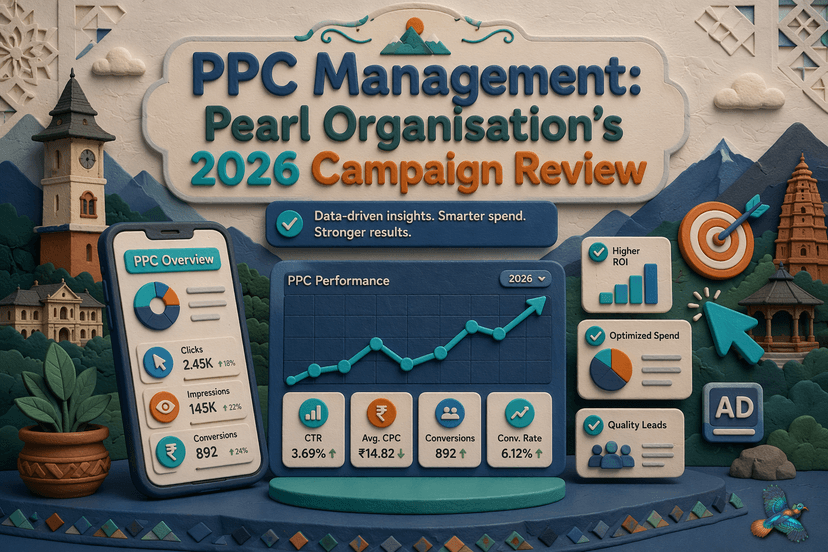
The exact PPC management cadence that produces ROAS for Dehradun businesses. What to check daily, weekly, monthly, and what to ignore.

SEO + Google Ads Run Together: Why Each Costs Less
Running SEO and Google Ads together for Dehradun businesses produces compounding results, not duplicated cost. The specific synergies, with real numbers.
Doon Digital
Digital Marketing Expert at Doon Digital, helping Uttarakhand businesses grow online.