
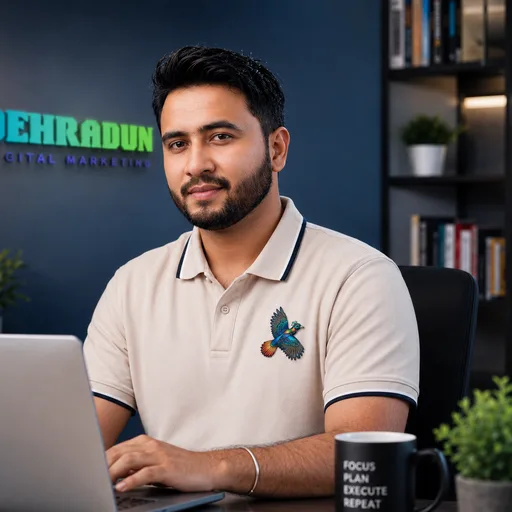
Founder, Doon Digital
Save this article to read later and share with your network
Performance Marketing in Tier-2 India: What Works
By Pankaj Singh, founder of Doon Digital.
Most performance marketing advice you read is written for Tier-1 cities. Delhi, Mumbai, Bangalore, Hyderabad. The strategies in those guides assume high CPC, sophisticated buyers, mobile-app dominance, English-first audiences, and 20-second decision cycles.
None of that fully applies in Dehradun, Haridwar, Rishikesh, Roorkee, Haldwani, or Nainital. The economics are different. The buyer behaviour is different. The channels that work are different. The metrics that matter are different.
I've been running performance marketing across Uttarakhand cities since 2019. Here's what's actually different about Tier-2 city performance marketing, and what works specifically in Doon Valley and surrounding areas.
What "Tier-2" actually means for performance marketing
The Tier-1 vs Tier-2 distinction in marketing isn't about population. It's about buyer behaviour and infrastructure.
Tier-1 marketing assumptions:
- High disposable income, willing to pay premium for convenience
- Sophisticated category buyers (researched, compared, branded)
- Mobile-app dominant (food delivery, transport, services all in-app)
- Short decision windows (decide in 20 seconds)
- English-first interfaces and content
- High trust in branded promotions and discounts
Tier-2 reality in Uttarakhand:
- Mid-range disposable income, value-sensitive
- Less-sophisticated category buyers (rely more on recommendations and reviews)
- Mixed mobile-app and direct-call usage (WhatsApp is dominant)
- Longer decision windows (3 to 14 days for considered purchases)
- Bilingual (Hindi-English) content needs
- Higher trust in local relationships and reviews than in promotions
Strategies that work in Mumbai often fail in Dehradun for these structural reasons, not because the marketers in Dehradun are less skilled.
What's different about Tier-2 buyers
Three buyer-behaviour differences shape everything.
Difference 1: Reviews matter more than ads in Tier-2 Uttarakhand.
A Mumbai buyer might book a service after seeing one strong ad. A Dehradun buyer reads 8 reviews, asks a friend on WhatsApp, looks at the company's photos on GBP, then maybe books. Review depth and recency are more important than ad sophistication.
Implication: Tier-2 marketing budget should weight more toward review generation, GBP optimization, and trust-building content. Less toward ad creative budget.
Difference 2: WhatsApp is the primary conversion channel, not in-app or web forms.
In Tier-1 cities, food delivery is in-app, salon bookings are in-app, taxi rides are in-app. Most service categories have an app intermediary.
In Tier-2 Uttarakhand, most services close on WhatsApp. Even when the customer first found the business through an ad or SEO, the final transaction conversation happens on WhatsApp.
Implication: Every Tier-2 performance marketing funnel should end in WhatsApp, not form fill, not phone call (though phone is still significant). WhatsApp business setup with proper auto-reply and 5-minute human SLA is foundational, not optional.
Difference 3: Local references and proof matter more.
A Tier-1 buyer might be impressed by "served 5,000+ clients across India". A Tier-2 buyer in Dehradun is more impressed by "trusted by Doon Global School, Welham Boys, Hurla Interio". Specific local names build more trust than aggregate national claims.
Implication: Tier-2 ad creatives and landing pages should feature local client logos, specific local landmarks, named local figures or institutions. Generic "trusted by 1,000+ businesses" claims work less well than "trusted by 50+ Dehradun clinics".
What's different about Tier-2 economics
The unit economics shift in three important ways.
Lower CPC, lower CPM, lower CPL across the board.
Typical Dehradun CPC ranges I see in 2026:
- Coaching and education: ₹15 to ₹60
- Clinics and healthcare: ₹20 to ₹120
- Hotels and hospitality: ₹12 to ₹70
- Restaurants and cafes: ₹5 to ₹25
- Real estate: ₹80 to ₹350+
Compare to Mumbai or Delhi CPCs which are typically 2 to 4x higher across the same categories.
This is good and bad. Good: same budget reaches more potential customers in Dehradun than in Tier-1 cities. Bad: total addressable market is smaller, so scaling beyond a point requires expansion to multiple Tier-2 cities, not just spending more in one.
Lower lifetime values for some categories, similar for others.
A Dehradun restaurant customer might have lower lifetime value than a Mumbai restaurant customer (smaller average order size, fewer total orders per year). But a Dehradun clinic patient has similar or higher LTV (loyal to a single doctor over years, refers family and friends).
Implication: cost-per-acquisition tolerance varies by category. Clinics, schools, and real estate in Dehradun can support higher CPAs than restaurants or retail.
Different conversion funnel velocities.
Tier-1 buyers convert fast and churn fast. Tier-2 buyers convert slowly and stay loyal. The same campaign in Mumbai and Dehradun produces different metrics: Mumbai shows faster lead-to-customer conversion but higher churn; Dehradun shows slower conversion but stickier retention.
Implication: Tier-2 performance marketing is judged differently. Don't expect Mumbai-velocity conversion. Do expect Mumbai-or-better LTV.
What works specifically in Uttarakhand Tier-2 cities
Five tactics consistently produce ROAS across my Dehradun, Haridwar, Rishikesh, Haldwani and Roorkee client engagements.
Tactic 1: Hyperlocal geo-fencing. Most Tier-2 agencies target "Dehradun" or "Uttarakhand" as the geo. Wrong. Sub-city neighborhood targeting works far better. Different bids for Rajpur Road vs Ballupur vs GMS Road. Different bids for Bhowali Road vs Mall Road vs Tallital in Nainital.
Tactic 2: WhatsApp-first funnels. Click-to-WhatsApp ads outperform Click-to-form ads by 2 to 3x on Tier-2 conversion rates. Build for WhatsApp first, web form second.
Tactic 3: Local social proof in ad creatives. Name local clients, show local landmarks, use Hindi-English mixed copy where the audience supports it. Generic "national brand" creative underperforms.
Tactic 4: Reviews as the primary trust signal. Invest heavily in review velocity. In Tier-2, ad spend without review depth produces worse results than less ad spend with strong review velocity.
Tactic 5: Seasonal pacing matters more. Dehradun coaching admission cycles, Rishikesh rafting season, Mussoorie summer peak, Haldwani retail festivals. Each Tier-2 city has its own demand seasonality. Calendar-pace budget around these windows aggressively.
What doesn't work in Uttarakhand Tier-2
Save your budget on these.
National-scale Display Network campaigns. Designed for Tier-1 sophistication. The audiences and creative don't fit Tier-2 buyer psychology.
YouTube ads at scale. YouTube works for awareness, not direct response in Tier-2. Smaller budgets can produce awareness, but expecting YouTube CPL on par with Search is unrealistic.
Influencer marketing at scale. Micro-influencer relationships work, but the scaled influencer marketing industry primarily serves Tier-1 brands. Tier-2 businesses get better ROI from local opinion leaders (a respected doctor, a popular local educator) than from generic influencers.
Mobile app installs. Most Dehradun service businesses don't need a custom app. The customer is already on WhatsApp. Building and promoting an app is wasted infrastructure.
Industry case examples from my own work
To make this concrete, here are real numbers from Tier-2 Uttarakhand engagements.
Rishikesh Adventure Hub (river rafting, Rishikesh): Performance marketing pivoted from generic national rafting campaigns to seasonal Dehradun-targeted and weekend Delhi-NCR-tourist-targeted campaigns. Published seasonal content targeting "best rafting months in Rishikesh" and "rafting packages from Dehradun". Result: 2.8x growth in rafting booking inquiries during the tourist season.
SJ Taxi Services (Dehradun): Route-based local SEO and PPC structure. Pages and campaigns built around "Dehradun to Mussoorie taxi" and "Jolly Grant airport taxi", not generic "taxi services Dehradun". Result: 55+ monthly direct calls from Google Maps and local search traffic.
Doon Real Estate (Dehradun): Performance marketing split across investment intent, rental search intent, and premium property buyer intent (instead of one broad real estate campaign). Result: 230% increase in qualified property lead submissions across 10 months.
Hurla Interio (Dehradun): Project-type-specific PPC campaigns ("modern kitchen interiors", "modular wardrobes") with local-landmark-anchored landing pages. Result: 70% increase in qualified consultation inquiries within 5 months.
The thread: each campaign was structured for the specific Tier-2 buyer's actual decision pattern, not borrowed from a national playbook.
What I'd recommend for any Uttarakhand business
If you're running performance marketing for a business in Dehradun, Haridwar, Rishikesh, Haldwani, Nainital, or Roorkee, four principles to internalize.
One: WhatsApp is the funnel destination. Build everything to end in WhatsApp conversation. Optimize for 5-minute human reply SLA. Train front-desk staff on WhatsApp closing skills.
Two: Reviews are infrastructure. Allocate 20% of marketing time to review collection. Not as an afterthought. As a core operational system.
Three: Hyperlocal beats city-wide. Geographic granularity at the neighborhood level outperforms city-level targeting. Build for Rajpur Road specifically, not Dehradun generically.
Four: Local proof beats national claims. Ad creative, landing pages, and content should feature named local clients, landmarks, and language. Skip generic national-brand framing.
For the structural details on Uttarakhand SEO that complement performance marketing, see How to Rank #1 for "Near Me" Searches in Dehradun. For the integration approach that makes performance marketing dramatically more efficient, see SEO + Google Ads Run Together: Why Each Costs Less.
Pankaj Singh is the founder of Doon Digital. He has run SEO and PPC campaigns for 200+ businesses across Uttarakhand since 2019.
Need help with what you just read?
Doon Digital can implement these strategies for your Dehradun business. Pick what fits.
Compare Dehradun Agencies
Seven Dehradun agencies compared on real rankings, us included.
Learn moreCase Studies
30+ case studies with real metrics and live links.
Learn moreFree Marketing Audit
5-page written report with what to fix first.
Learn moreDigital Marketing in Dehradun
Local services across Dehradun's neighbourhoods.
Learn moreRelated Articles
Explore more insights from Doon Digital
5 Local SEO Services Secrets to Rank Higher in Google Maps
Discover five practical Local SEO Services secrets to boost your Google Maps ranking and attract more nearby customers in Dehradun and Uttarakhand.

How to Optimize Performance Marketing Campaigns Efficiently
Ads spending but results flat? The problem is usually the optimization sequence, not the channel. How to fix campaigns in the right order.
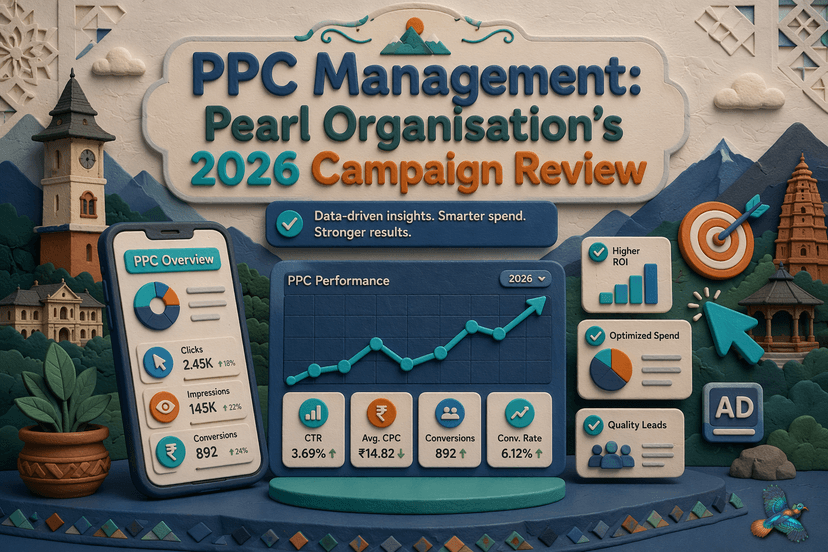
How Often to Check and Tweak PPC Campaigns
The exact PPC management cadence that produces ROAS for Dehradun businesses. What to check daily, weekly, monthly, and what to ignore.
Pankaj Singh
Founder, Doon Digital
Founder of Doon Digital. SEO and PPC for Uttarakhand businesses since 2019.